
Online Appliance Repair Course: Full Curriculum, Price and Timeline
Every course in the Home Alliance Academy appliance repair training, what it covers, how many hours it runs, and exactly what the tuition includes. No sales call needed to see it.
How the course works
What taking an online appliance repair course actually looks like
Most appliance repair courses online are a video library and a certificate. Six things happen here in parallel from the week you enroll, and none of them require you to be anywhere in particular.
Watch the lessons
Each course pairs video lessons with worked examples on real machines — a sealed system, a direct-drive washer, an oven element circuit.
Practise in 3D
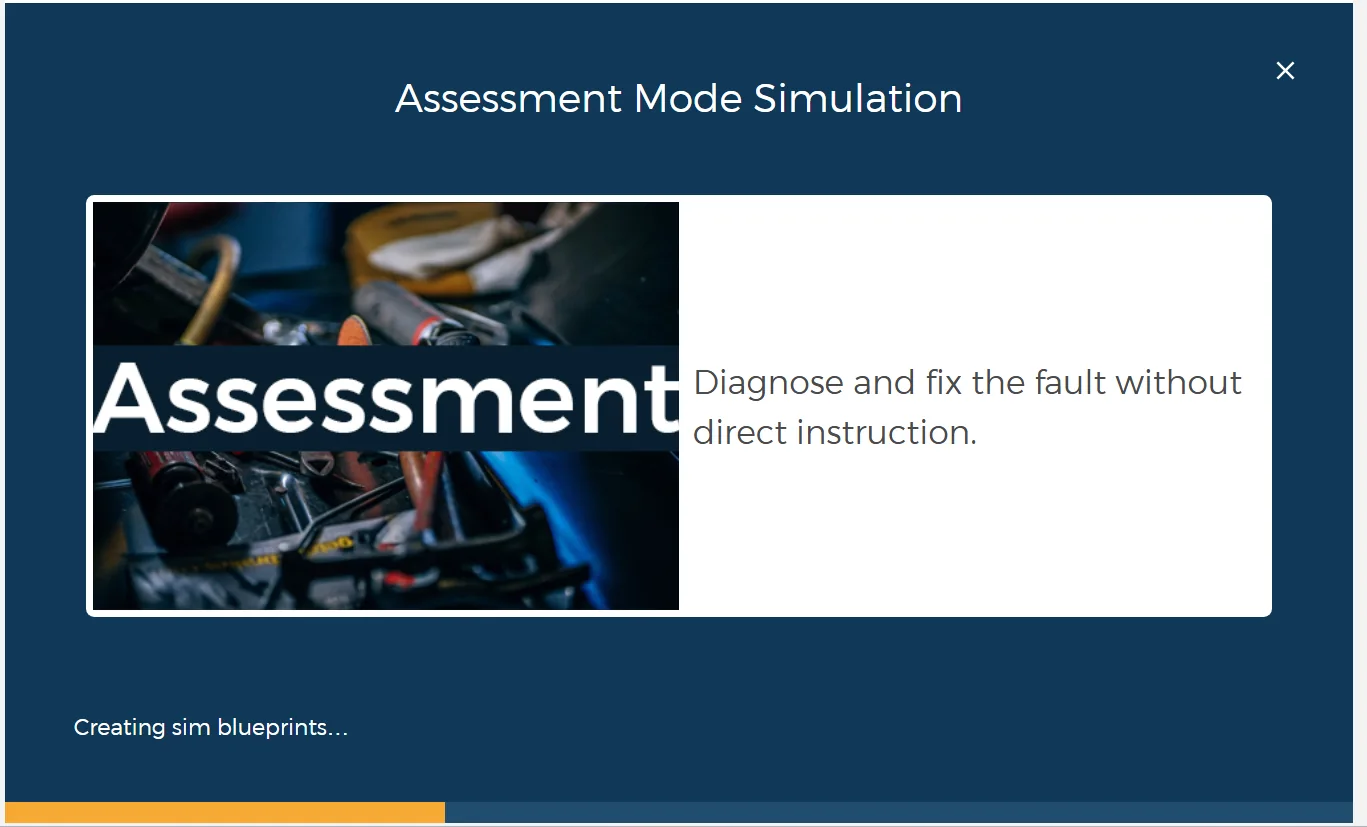
Open a virtual appliance in a virtual kitchen, set the control dials, take readings from the toolbox and change components, then run the machine to see whether the fault has cleared. Assessment Mode then gives you a fault and no instructions.
Diagnose
Guided fault-finding exercises. You are given symptoms and a wiring diagram and have to reach the fault the way you would on a call.
Join live technician sessions
Interactive sessions with a working technician. Ask your question and get an answer on the spot — not a recording.
Certify
The 49-hour safety block runs alongside the technical courses, so you finish exam-ready for your certifications rather than starting from scratch afterwards.
Get backed up
Troubleshooting support and a technician hotline stay open for a year after you finish, for the jobs where you are standing in front of a machine you have not seen before.
The curriculum
Everything in the appliance repair course, hour by hour
126 hours of training across 56 courses, grouped into four blocks. Safety comes first because it is what makes you employable; the trade blocks build on top of it. Most courses are delivered in both English and Spanish, and many carry CEU credit.
Safety Academy
A technician-ready safety training system covering OSHA-aligned fundamentals, hazard prevention, emergency response and safe work practices. This is the block that makes you employable on day one — contractors and insurers ask for it before they ask anything else.
Core Safety Foundations 9 hours
- Safety Basics2 hWorkplace safety fundamentals, hazard recognition, mitigation, PPE basics and foundational safe practices.
- Personal Safety & Work Practices2 hCore safety behaviours for technicians — tools, ladders, machinery, electrical hazards, driving, troubleshooting safety and incident reporting.
- Hazard Communication3 hThe Hazard Communication Standard (HazCom), SDS interpretation, labeling systems, chemical handling and communication protocols.
- Fire Prevention2 hFire hazards, extinguishers, evacuation plans, preventive behaviour and workplace fire safety.
Physical Hazard Prevention 12 hours
- Preventing Slips, Trips & Falls3 hHazard identification, floor safety, prevention strategies, safe surfaces and workplace fall procedures.
- Ladder Safety3 hLadder types, inspection, setup, safe climbing, fall prevention and operational best practices.
- Hand & Power Tool Safety3 hTool hazards, safe operation, maintenance, PPE selection and accident prevention.
- Proper Lifting & Moving (Back Safety)3 hBack mechanics, ergonomic lifting, material handling equipment, injury prevention and corrective response.
Environmental & Air Quality Safety 9 hours
- Mold Awareness3 hMold identification, health risks, building conditions, prevention, remediation and legal or ethical issues.
- Asbestos Awareness3 hTypes of asbestos, health risks, ACM identification, repairs, safe handling, compliance and emergency response.
- Confined Spaces3 hConfined space hazards, controls, legal requirements, safety protocols, entry procedures, team roles and emergency actions.
Electrical & Equipment Safety 6 hours
- Electrical Safety3 hElectrical hazards, safe practices, key PPE, tools for electrical work, high-risk scenarios and mitigations.
- Lockout / Tagout (LOTO) Safety3 hHazardous energy sources, OSHA LOTO standards, energy isolation, devices, verification steps, complex scenarios and compliance.
Emergency & Risk Response 13 hours
- Vehicle Safety4 hDriver behaviour, passive and active safety systems, vehicle checks, environmental factors, maintenance and accident response.
- Emergency Response4 hFirst aid, medical emergencies, natural disaster response, fire situations, hazardous materials and hostile incidents.
- Fatigue Management3 hCauses and impacts of fatigue, assessment, management strategies, technologies and workplace implementation.
- Using a Multimeter2 hMeasuring voltage, current and resistance, continuity testing, and safely applying a multimeter in real troubleshooting scenarios. 0.2 CEUs.
Tooling 4 hours
- Key Hand Tools4 hWrenches, pliers, screwdrivers, hammers and other fundamental tools: their functions, correct techniques for safe use, and maintenance for long-term performance.
Appliance Repair
The core trade block, built around the appliance categories that generate the call volume. Every course covers theory, components, diagnostics, maintenance and the safety workflow that goes with it.
Refrigeration Systems 6 hours
- Domestic Refrigerators — Theory & Components3 hRefrigerator types, configurations, the refrigeration cycle, secondary systems, and electrical and control systems.
- Domestic Refrigerators — Troubleshooting & Maintenance3 hMaintenance workflows, diagnostic patterns, system issues, safety protocols and refrigerant handling.
Cooking Appliances 13 hours
- Microwave — Theory & Components2 hElectromagnetic theory, magnetron function, wave propagation, component design and safety.
- Garbage Disposal — Theory & Components3 hFunctional theory, component mechanics, safety, troubleshooting and basic repairs.
- Ranges — Theory & Components3 hHeating methods, mechanics, key components, safety procedures and troubleshooting.
- Ovens — Theory & Types3 hElectric and microwave oven theory, installation standards, maintenance, control systems and troubleshooting.
- Kitchen Exhaust Hoods — Theory & Components2 hVentilation design, components, airflow principles, cleaning routines, safety compliance and diagnostics.
Dishwashers & Laundry Appliances 12 hours
- Dishwasher — Theory & Components4 hPumps, sensors, solenoids, electrical and plumbing systems, diagnosing failure modes and maintenance.
- Washers — Theory & Components4 hMechanical systems, electrical circuits, water flow mechanics, diagnostics, and safety and repair workflows.
- Washing Machines — Installation & Maintenance2 hInstallation standards, setup, cleaning, common issues and efficiency principles.
- Dryers — Theory & Maintenance2 hDrying mechanics, heating systems, airflow management, moisture detection and troubleshooting.
Mechanical, Electrical & Refrigeration
The fundamentals that decide whether you are a parts changer or a technician. Electrical theory, diagnostics, blueprint reading, refrigeration and the mechanical skills underneath all of it — the block that lets you work out a fault you have never seen before.
Mechanical Fundamentals 11.6 hours
- Mechanical Troubleshooting4 hA structured, real-world approach to diagnosing mechanical systems: breaking down complex problems, identifying root causes and choosing effective corrective action under pressure.
- Basics of Drawings & Blueprints2 hThe structure and language of blueprints — symbols, notation, dimensions and schematics — and how to translate design documents into real-world tasks.
- Basic Mechanics1 hFundamentals of mechanical systems: simple and complex machines, energy and fluid mechanics.
- Fasteners1 hTypes, functions and correct applications of screws, clips, clamps, bolts, anchors and lockpins.
- Piping3 hPiping systems, materials, fittings, sizing, installation, joining methods and safety requirements.
- Fabrication Tools1 hCutting, bending, drilling and sheet-metal tooling, and how to handle each safely and accurately.
Electrical Theory & Diagnostics 20.4 hours
- Electricity Fundamentals3 hVoltage, current, resistance and circuit behaviour. Ohm's Law, electrical measurements, and the function of capacitors and resistors. 0.3 CEUs.
- Electrical Flow1.5 hHow electrical signals control system behaviour, why component ratings matter, and how proper electrical interpretation keeps you safe. 0.15 CEUs.
- Series vs Parallel and Electrical Rules1 hHow series and parallel circuits behave in real systems, applying Ohm's Law and Watt's Law to diagnose components such as heat strips and heaters.
- Intro to Electrical Troubleshooting1 hA step-by-step approach to electrical diagnostics: common faults, proper tools and safe technique. 0.1 CEUs.
- Electrical Components — Part 11.5 hOvercurrent protection, solenoids and transformers: construction, function, field application and the early signs of failure.
- Electrical Components — Part 22 hCapacitors, relays and contactors, crankcase heaters and heat strips — how to test, identify and select each one.
- Advanced Electrical Troubleshooting3 hComplex diagnostic scenarios, advanced tools, system diagnostics and repair strategy. 0.3 CEUs.
- Motor Circuit Calculations2.6 hA step-by-step NEC-based course on conductor sizing, overload and short-circuit protection, starting current, duty cycles and special conditions.
- Basic Wiring2 hWiring systems, conductor types, safety and installation technique, including lighting and receptacles. 0.2 CEUs.
- Wiring Diagrams1 hReading and interpreting wiring diagrams for residential and commercial systems. 0.1 CEUs.
- Reading Electrical Drawings & Blueprints1 hElectrical blueprint symbols, layout conventions and practical application in residential and commercial systems. 0.1 CEUs.
- Fuses and Circuit Breakers1.75 hHow fuses and breakers function, correct ratings, safe inspection and testing, and the common causes of repeated tripping.
- Capacitors and Resistors1.33 hIdentifying, reading the ratings of and safely testing the two most common electrical components in the field.
- Solenoids1 hHow solenoids function, where they are used, and how to identify and apply each type. 0.1 CEUs.
Refrigeration & Heat 11.75 hours
- Refrigeration 1011.5 hHow systems move heat using the refrigeration cycle, why refrigerants absorb and release heat, and how heat moves by conduction, convection and radiation.
- Refrigeration: From Vapor to Liquid1.75 hEvery stage of the refrigeration cycle and the role of the compressor, condenser, metering device, evaporator and system fans, plus superheat and subcooling measurement.
- Heat Transfer and the Basic Cooling Cycle2 hHeat transfer mechanisms, types of heat energy, superheating and subcooling, and why each matters to efficient operation.
- Thermostats 1011.5 hElectromechanical vs electronic models, bimetal and bulb-and-capillary mechanisms, smart thermostats, and correct placement, wiring and setup.
- Brazing & Soldering3 hHeat control, proper tools, safety protocols and techniques for durable, leak-free joints. 0.3 CEUs.
- Fuses and Circuit Protection in Cooling Systems1.75 hWhere protective devices sit in a cooling system, how to test them safely, and how to recognise the root cause behind a blown fuse.
Customer Service
The block most technical courses skip. What you say at the door and on the phone decides your review score, and your review score decides how many jobs you get.
Working with Customers 1 hour
- Customer Interaction1 hCommunicating clearly, handling customer concerns, resolving problems and building trust during service appointments. 0.1 CEUs.
126 hours. One price.Three jobs pay for the whole thing.
Start todayTools
What you actually need to start
A digital multimeter is the only tool worth buying in week one. Everything in the foundation modules is done with it, and you cannot diagnose anything without being able to read one properly.
The rest builds up as you go: nut drivers, a putty knife for panel clips, a clamp meter once you are into motors, and a recovery setup only when you reach sealed systems. The course tells you what to buy and when, so you are not spending $2,000 on a kit before your first paid job.
You do not need a van, a workshop or an inventory to complete the course or take your first jobs.
How it compares
Online appliance repair course vs the alternatives
There are four realistic ways to learn this trade. Here is the honest trade-off on each.
| Route | Typical cost | Time | Certification included | Business training |
|---|---|---|---|---|
| Home Alliance Academy | $1,800–$2,100 | 1–3 months | EPA 608 + OSHA 10 prep | Yes |
| Other online appliance repair courses | $500–$2,000 | 2–12 months | Usually separate | Rarely |
| Community college / trade school | $5,000–$20,000 | 1–2 years | Varies by program | Rarely |
| Apprenticeship under a technician | Paid, but low | 1–3 years | No | No |
Swipe the table sideways to see every column.
Tuition
What the appliance repair course costs
One fee covers everything: all 126 hours across the four blocks, the live webinars, the certification preparation, a full year of technical support after you finish, and three months free on Home Alliance Launch™ if you go independent.
Pay the whole course at once and the price drops by $300. Nothing else changes.
Pay in fullThree payments, one a month. No credit check, no interest. Start now and pay as you learn.
Pay monthlyBoth options include
- All 56 courses, 126 hours, self-paced
- Live webinars with working technicians
- EPA 608 and OSHA 10 exam preparation
- One year of technical support after you finish
- Business and career launch track
- 3 months free on Home Alliance Launch™ if you go independent
Still deciding?
If you are not sure which certification you need before you enroll, start with appliance repair certification explained — it covers what is legally required and what is just useful.
Three jobs pay the course back.Apply in two minutes. No payment today.
Start todayFAQ
Questions about the course
How long is the online appliance repair course?
126 hours of training, typically completed in one to three months. The course is self-paced: students giving it full days finish nearer one month, and those studying around a full-time job take closer to three.
Is this appliance repair course fully online?
Yes. All 56 courses, the live webinars, the live technician sessions and the certification preparation are delivered online. There is no campus and no in-person attendance requirement.
Do I need my own tools to take the course?
A basic digital multimeter is worth buying early, because the diagnostic modules are far more useful if you can follow along on a real machine. Beyond that, nothing is required to complete the coursework — which is part of why an appliance repair course online suits people who are still working.
What is included in the $2,100 course?
All 126 hours across the four blocks, EPA 608 and OSHA 10 exam preparation, guided diagnostic exercises, live technician sessions, one year of technical support after you finish, wholesale parts pricing, and three months free on Home Alliance Launch™. Installment plans are available.
Are there appliance repair classes with live instruction?
Yes. Alongside the self-paced modules there are live technician sessions run by working technicians, where students bring real faults they are stuck on and work through the diagnosis together.
What happens after I finish the course?
You get career support either way: resume and interview preparation plus introductions within the Home Alliance employer network if you want to be hired, or the business launch track covering LLC setup, insurance, pricing and first customers if you want to work for yourself.
Next step
Enroll in the online appliance repair course
Apply in about two minutes. An advisor will confirm the timeline and payment options before you commit to anything.
APPLY
Apply for appliance repair training
Fill in the form. An advisor will call you and explain the course, the price and how to start. You pay nothing to apply.
No experience needed
Keep your current job while you study
Pay monthly if you need to
You pay nothing today